Better Sleep for Autistic Individuals: Gentle Strategies That Can Make a Big Difference
Sleep can be one of the biggest challenges for many autistic individuals and their families. Difficulty falling asleep, waking frequently during the night, or rising very early are all common experiences.
In fact, research suggests that 50-80% of autistic children experience ongoing sleep difficulties.
Sleep challenges may be related to sensory sensitivities, anxiety, differences in circadian rhythms, or variations in melatonin, the hormone that helps regulate sleep.
The encouraging news is that many families find meaningful improvement by making small, supportive changes to bedtime routines and environments.
Here are several strategies that sleep experts often recommend.
Create a Calm and Predictable Bedtime Routine
Many autistic individuals thrive with consistency and structure. A predictable bedtime routine helps signal to the brain that it’s time to wind down.
Experts recommend following the same routine each evening, ideally starting 30-60 minutes before bedtime.
A calming routine might include:
- A warm bath or shower
- Putting on comfortable pajamas
- Reading a favorite book
- Listening to quiet music or an audiobook
- Gentle stretching or breathing exercises
Reduce Evening Sensory Stimulation
The time before bedtime should ideally be calm and low-stimulus.
Bright lights, loud environments, and screens can make it harder for the body to transition into sleep mode.
Helpful steps include:
- Dimming lights in the evening
- Turning off screens about one hour before bedtime
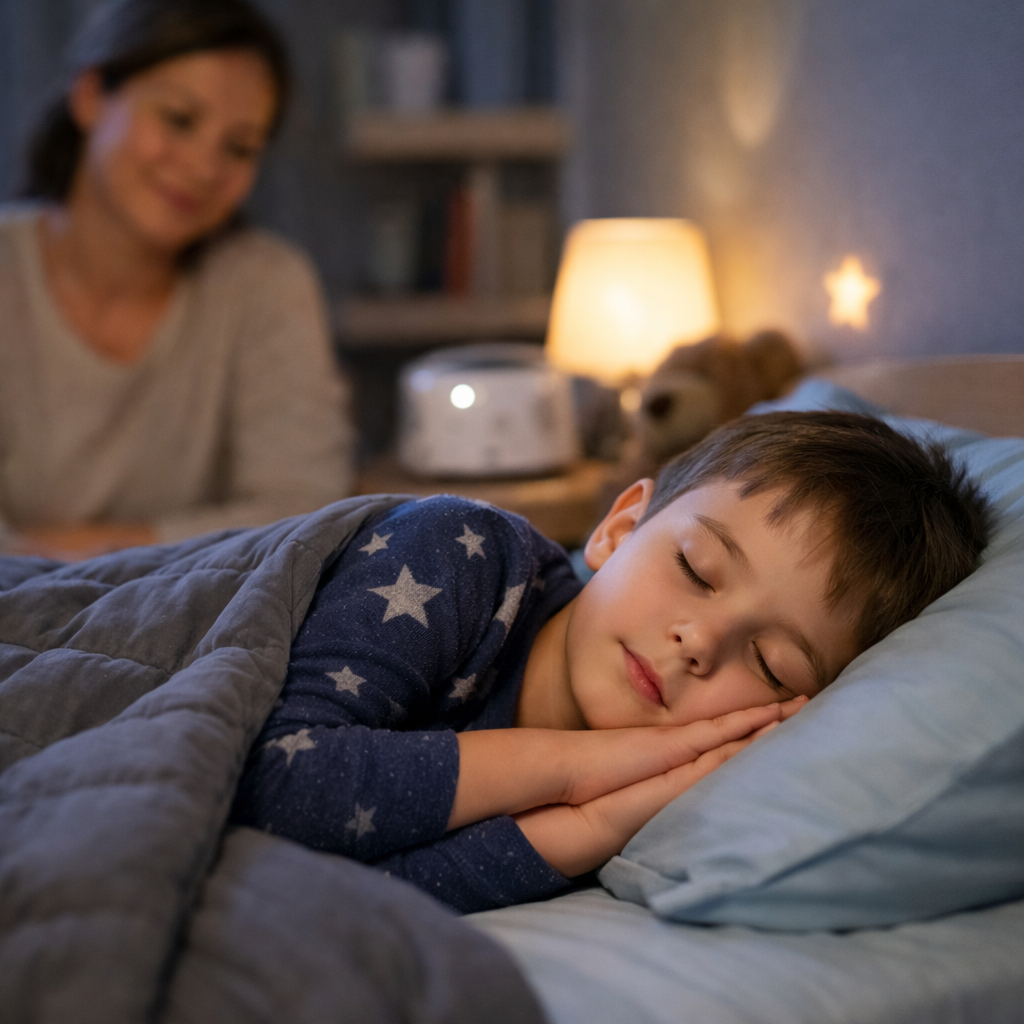
- Using soft lamps instead of bright overhead lights
- Playing gentle music or white noise
Research shows that blue light from screens can interfere with melatonin production, which can delay sleep.
Make the Bedroom a Comfortable Sleep Space
A calm sleep environment can make a surprising difference.
Sleep specialists often recommend bedrooms be dark, cool, and quiet.
Helpful ideas include:
- Using blackout curtains if light is disruptive
- Reducing clutter or visual distractions
- Adding white noise or a fan to mask sudden sounds
- Choosing bedding textures that feel comfortable
Some autistic individuals also find comfort in weighted blankets, which may provide calming deep pressure.
Support a Healthy Sleep Rhythm
Our bodies run on an internal circadian rhythm, which regulates when we feel sleepy and when we feel alert.
You can help support this rhythm by:
- Waking up at the same time each day
- Getting natural sunlight during the day
- Encouraging physical activity earlier in the day
- Avoiding caffeine late in the day
Visual Schedules Can Help with Transitions
For some autistic individuals, visual supports can make bedtime routines clearer and less stressful.
A simple visual schedule might include:
- Brush teeth
- Put on pajamas
- Read a book
- Lights out
These visual cues can reduce uncertainty and help bedtime feel more predictable.
Helping the Mind Slow Down
Sometimes the body is ready for sleep, but the mind is still busy.
Gentle relaxation techniques may help calm the nervous system:
- Deep breathing exercises
- Guided relaxation recordings
- Calm audiobooks or storytelling
- Writing worries down earlier in the evening
When Additional Help May Be Needed
If sleep challenges continue despite consistent routines and environmental changes, it may be helpful to consult a healthcare professional.
Sleep specialists and pediatricians can help identify underlying issues and suggest personalized strategies.
A Final Encouraging Thought
Sleep challenges are very common in the autism community, and many families experience them at different stages of life.
With patience, consistency, and the right supports, many autistic individuals gradually develop sleep routines that work better for them and their families.
Even small improvements can make a meaningful difference – bringing more rest, calm, and brighter days ahead.
Helpful resources:
- Autism Speaks
https://www.autismspeaks.org/sleep - Sleep Foundation
https://www.sleepfoundation.org/physical-health/autism-and-sleep - Autism Research Institute
https://autism.org/sleep-issues-in-autism/ - National Autistic Society
https://www.autism.org.uk/advice-and-guidance/topics/physical-health/sleep - HealthyChildren.org
https://www.healthychildren.org/English/healthy-living/sleep
- Sleep Foundation
https://www.sleepfoundation.org/how-sleep-works/bedtime-routine - Sleep Foundation
https://www.sleepfoundation.org/children-and-sleep/how-blue-light-affects-kids-sleep - Harvard Medical School
https://www.health.harvard.edu/staying-healthy/blue-light-has-a-dark-side - Centers for Disease Control and Prevention
https://www.cdc.gov/sleep/about/index.html
- National Sleep Foundation
https://www.sleepfoundation.org/circadian-rhythm - Cleveland Clinic
https://my.clevelandclinic.org/health/articles/circadian-rhythm
- Sleep Foundation
https://www.sleepfoundation.org/insomnia/relaxation-exercises-to-help-fall-asleep - American Academy of Neurology
https://www.aan.com/Guidelines/home/GuidelineDetail/988