Autism acceptance in sports becomes most powerful when it is personal. Beyond campaigns and awareness months, real change happens when athletes and organizations openly share lived experiences and create space for autistic individuals to participate, contribute, and belong.
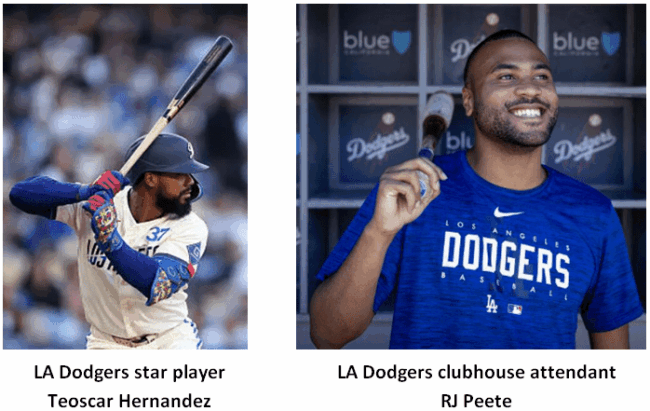
Two stories in Major League Baseball – those of Teoscar Hernández and RJ Peete – highlight how autism is reshaping conversations in professional sports, not through slogans, but through family, employment, dignity, and everyday inclusion.
Teoscar Hernández: A Father’s Perspective on Autism in the Public Eye
As a key player for the Los Angeles Dodgers, Teoscar Hernández has also become part of a broader conversation about autism through his openness about his son’s diagnosis.
Rather than treating autism as something separate from family life, Hernández has helped normalize it within the world of professional sports. His willingness to speak about his son reflects a growing shift among athletes: autism is not a rare or distant topic, but something that exists within many families connected to the game.
By sharing his perspective, Hernández helps:
- Reduce stigma around autism in high-performance sports environments
- Encourage other families to speak more openly about diagnosis and support
- Reinforce that autism is part of everyday life for parents, teammates, and fans alike
His story matters because it brings autism into spaces where silence once existed. In doing so, it helps replace uncertainty with understanding and connection.
RJ Peete: Employment, Dignity, and Belonging in Major League Baseball
While Hernández’s story centers on family, RJ Peete represents another essential dimension of autism inclusion: meaningful participation in the workplace.
RJ Peete, who is autistic, works with the Los Angeles Dodgers as a clubhouse attendant. His role is not symbolic – it is functional, valued, and integrated into the daily operations of a professional sports organization.
His presence in Major League Baseball demonstrates something far more powerful than awareness campaigns alone: that autistic individuals can thrive in structured, supportive, and purpose-driven environments when given the opportunity.
RJ’s journey highlights:
- The importance of supported employment pathways
- The value of recognizing strengths rather than focusing on limitations
- The impact of inclusion when it is embedded in real roles, not just messaging
In a world where employment can still be a barrier for many autistic adults, RJ’s role with the Dodgers shows what belonging looks like in practice. He is not outside the game – he is part of it. Click here to read more.
Two Stories, One Message: Inclusion Is Participation
While their roles differ, Teoscar Hernández and RJ Peete are connected by a shared truth: autism inclusion in sports is not theoretical – it is lived.
- Hernández brings visibility through family and advocacy within the athlete community
- Peete brings visibility through everyday participation and meaningful work within the organization
Together, they reflect a broader cultural shift in professional sports: moving from awareness to acceptance, and from acceptance to belonging.
Why These Stories Matter
Sports often reflect society at large. When athletes speak openly about autism in their families, and when organizations provide real employment opportunities for autistic individuals, they help reshape public understanding.
These examples challenge outdated assumptions:
- That autism is separate from professional sports culture
- That inclusion is only about accommodation rather than contribution
- That visibility alone is enough without opportunity
Instead, they point toward something more grounded and lasting: environments where autistic individuals are not simply included, but valued.
From Awareness to Belonging
The stories of Teoscar Hernández and RJ Peete show that autism acceptance in sports is strongest when it becomes personal, practical, and permanent.
Whether through a father’s advocacy or a clubhouse role built on trust and contribution, both stories reflect the same evolution:
Autism is not something to be explained from a distance – it is something to be understood through connection, participation, and respect.
And when that happens, sports stop being just a game.
They become a place where people truly belong.