By Mary J. Wrobel, Luminary Leader, Autism Directory
People with ASD typically have some level of anxiety much of the time. Most experts agree it’s part of the condition of autism. Some people will say that it’s the cause of many of the behavior problems associated with autism.
When you add confusion, uncertainty, overwhelming sensory stimulation, fear, negative thoughts and an inability to escape or respond appropriately to a problem situation, that level of anxiety is going to hit the roof. This is often what happens to people with autism. Fear and anxiety and the inability to problem solve causes them to freak-out and do irrational things.
There’s a reason people with autism like routine and predictable situations, and why they hate change and anything they can’t control. Change and unpredictability can cause fear and anxiety. And most people with ASD are battling anxiety constantly-especially when they are outside of their comfort zone and interacting with others.
As a result, many adults with autism are trapped in their own homes because they would rather stay in a safe place than attempt going out and dealing with their anxiety. Temple Grandin once said at a conference I attended that she takes medication for anxiety and won’t step out of her home without taking her meds. That says a lot about what adults with autism are dealing with, and most of the adults with ASD that I know take some form of medication to relieve the anxiety in their lives.
Unfortunately, anxiety doesn’t just go away and stay away. People who suffer from anxiety and panic attacks need to learn how to control them effectively. Sometimes that requires medication, which we know many children and adults with ASD take on a regular basis. But medication isn’t always completely effective and furthermore, all medication has side effects. Medication alone is usually not the answer when battling anxiety. People with autism first need to recognize that they have anxieties and then learn what conditions cause their anxiety.
Anxiety can look different for different people, and recognizing your own anxiety symptoms is the first step. Anxiety can creep up on a person or burst out suddenly. It might start by feeling fear, uneasiness and panic just from thinking about a possible situation. Constant worrying, scary thoughts and even nightmares might happen frequently. Calming down becomes difficult and sometimes impossible no matter what you do. Physically you may have a hard time breathing or your breathing becomes shallower. Your heart might start beating faster and your muscles might tense up. You might feel sick to your stomach, dizzy and faint.
As anxiety increases you may sweat or feel cold and clammy. Your thoughts might race and you may have an overwhelming need to run and escape. This is the fight or flight stage of anxiety and this is when things become serious. Some people become physically aggressive when they feel too anxious because the need for self-preservation takes over and consequently, they might lash out at anyone who prevents them from escaping or tries to control them. They might scream and shout and become destructive to things near them. This is often when authorities take over and the anxious person may need to be subdued and physically controlled. You don’t ever want to be in that situation. You need to learn and practice strategies to self-calm and manage your anxieties, which will be explained later. First you need to know what triggers your anxieties.
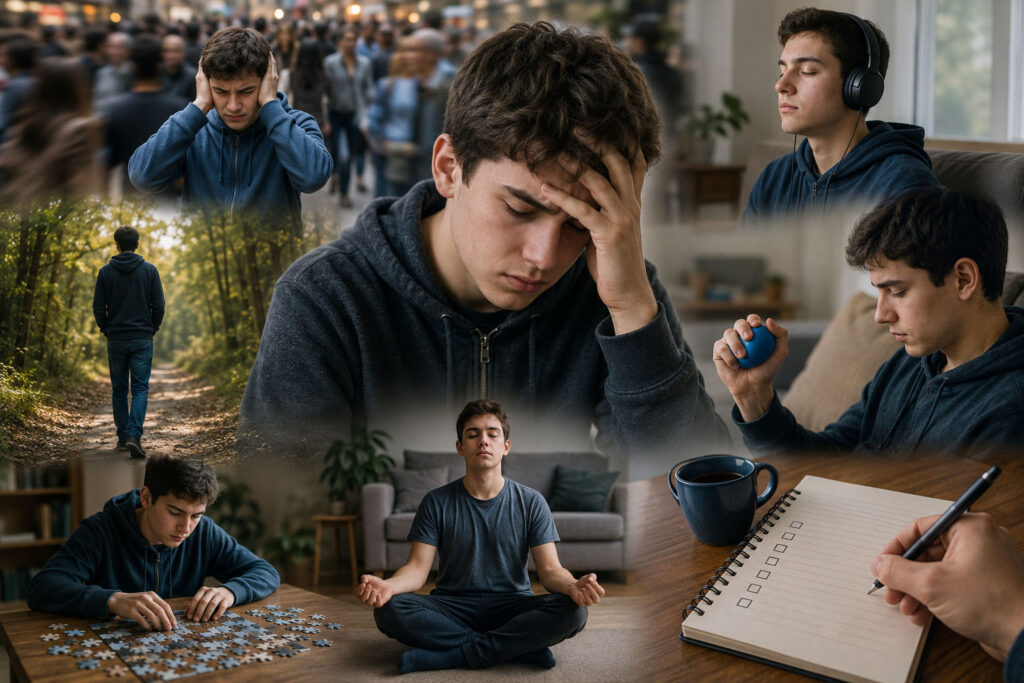
Anxiety triggers can be many things and recognizing those triggers is essential. Typical triggers may include being in an over stimulating environment, loud unexpected noises, large crowds, feeling lost or confused, being in an uncomfortable or scary environment, being separated from trusted friends or adults, not knowing what to do, being told to do something that scares you, not knowing the expectations, not knowing how long you need to be somewhere and being too long in a place you don’t like and sometimes just thinking about an upcoming or possible stressful situation.
Once a person can identify the symptoms of their anxiety and they know what triggers it, they now need to learn how to control it or at least manage it to the best of their ability. Here are several strategies which may help an individual with autism alleviate anxiety.
- Always tell a trusted friend, adult or family member when you are experiencing anxiety and let them help you leave a situation or calm down. If you are alone, call or contact a trusted person. Sometimes just talking to a close friend or family member will help ease your anxiety.
- Take a break and leave the room or place and find somewhere that you can be alone or with a trusted person to calm down.
- Try to calm down with deep breathing, counting silently or any meditative way that helps you feel calmer. You need to try to relax your physical anxiety.
- Close your eyes and listen to favorite or relaxing music. If you are in a public place, use ear buds attached to a smart phone.
- Take a walk, exercise or dance. Think of something funny and laugh or giggle.
- In anticipation of a stressful situation, do a puzzle, play a quiet game or do any fun or relaxing activity that you enjoy doing and will help you feel less anxious. Do this to reduce anxious thoughts before things escalate.
- If you are somewhere and can’t leave, close your eyes and picture a favorite place, or favorite movie. Cover your ears or put on headphones to block out noise and stimulation.
- If you have stim objects or a stress ball use that for as long as it takes to calm down and keep using those tools to prevent any escalating anxiety.
- Do not do any activity which would be considered inappropriate if you are in a public place, such as inappropriate self-touching or rubbing.
If you know you will be in a stressful, anxious situation prepare yourself with materials and successful strategies before you are in that stressful environment.
Map out what you expect will happen and how you will respond. Make lists and schedules of what will happen, even a step-by-step schedule with how long each activity might take. Channel any of your nervous energy with movement. Adjust your perspective and remind yourself to be flexible. Give yourself a pep talk and talk through difficult situations. If possible, laugh about the stressful situation. Laughter will help you relax and feel more comfortable. If things get out of control and you feel yourself losing it, do whatever you can to calm down and leave that situation quickly and quietly.
Finally, remind yourself that feeling stress and anxiety is temporary and soon you will feel better again.