By: Tremita Tasneem
A Remembrance Day guide for autistic children and their families
Every November 11, Canadians gather to honour those who served and those who never came home. At 11 a.m., many observe two minutes of silence to remember their sacrifices.
For some autistic children, attending a Remembrance Day ceremony can be challenging. Large crowds, unfamiliar sounds, cold weather, and long periods of waiting may feel overwhelming, especially when they don’t know what to expect.
A little preparation can help make the experience more comfortable. Whether your family plans to attend a ceremony or remember from home, there are many ways to take part.
What to Expect at a Ceremony
Remembrance Day ceremonies across Canada often include several familiar traditions. While the order and details may vary, here are some moments families might encounter:
- O Canada: Attendees stand, and many sing the national anthem.
- The Last Post: A bugle call traditionally played before the two minutes of silence.
- Two Minutes of Silence: A moment of quiet reflection, usually observed at 11 a.m.
- The Lament: A piece commonly played on bagpipes.
- The Rouse: A bugle call traditionally played following the two minutes of silence.
- The Act of Remembrance and wreath laying: A verse is read, often followed by the response “We will remember them.” Wreaths are placed to honour those who served.
Some ceremonies may also include gun salutes or aircraft flypasts. Checking the local ceremony’s program beforehand can help families know what to expect. If loud sounds are a concern, knowing when they might occur can help you plan when to use ear defenders or take a break.
Helping Your Child Prepare
If your family plans to attend a ceremony, consider walking your child through what will happen ahead of time. A visual schedule showing the different parts of the ceremony can make the experience more predictable.
It may also help to explain unfamiliar traditions in simple language. For example, rather than saying “the fallen,” you could explain that Remembrance Day is a time to remember people who died while serving in wars and conflicts.
Sensory needs are another important consideration. Ear defenders, a favourite fidget, and warm clothing may help your child feel more comfortable. If they’re interested, you could also listen to recordings of the bugle or bagpipes together at a low volume, allowing them to decide whether they’d like to continue.
If your child would find it helpful, you could practise a short moment of silence together at home before the ceremony. A visual timer can show how long it will last, while holding a poppy or another familiar object may provide reassurance. Remember that sitting perfectly still isn’t the only way to show respect. A child who rocks, hums, or wears headphones can still participate meaningfully.
Choosing a quieter spot near the edge of the crowd and agreeing on a signal to take a break can also help. Most importantly, involve your child in deciding what feels manageable for them.
Even small details, like wearing a poppy, can be adapted. During the Royal Canadian Legion’s Poppy Campaign, traditional lapel poppies are offered by donation. Poppies are traditionally worn on the left side, over the heart. If wearing one is uncomfortable, families can consider alternatives such as a poppy sticker.
Other Ways to Remember
Attending a public ceremony isn’t the only way to participate in Remembrance Day. Families can also:
- Watch from home: The national ceremony in Ottawa is broadcast each year, allowing families to watch in a familiar environment and adjust the volume.
- Observe the silence privately: Take a moment at 11 a.m. in a comfortable setting.
- Get creative: Make paper poppies, write a thank-you card to a veteran, or read a picture book about Remembrance Day.
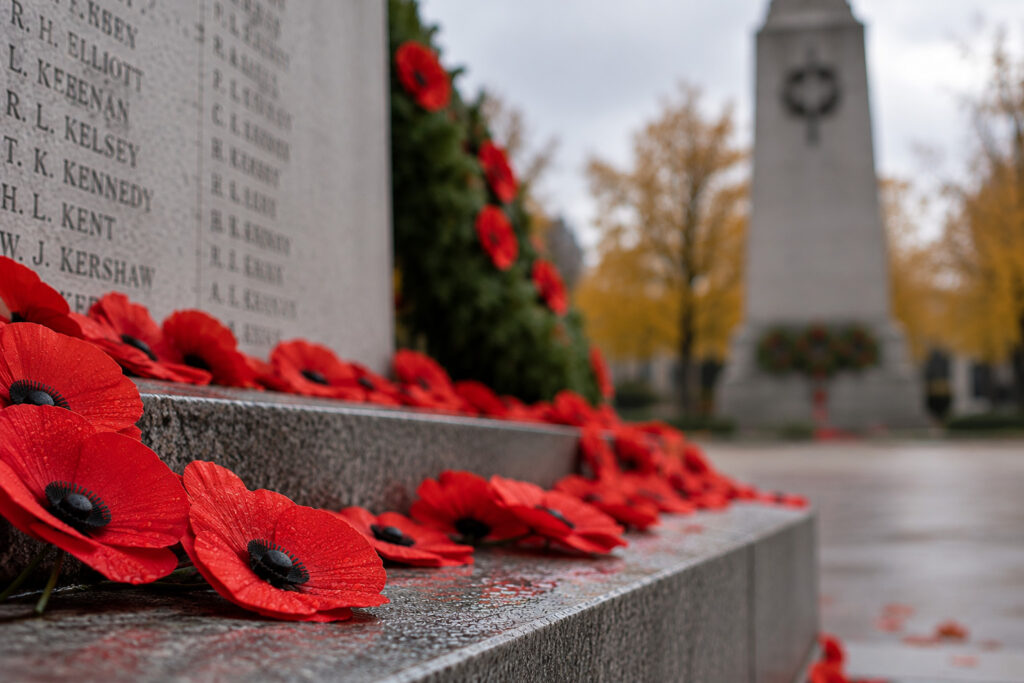
- Visit a memorial: Stop by a local cenotaph on a quieter day to lay a poppy without the crowds.
- Explore personal interests: Children interested in history, maps, or aircraft may enjoy learning more about the people and events being remembered.
What Matters Most
Remembrance Day is about honouring those who served and remembering the sacrifices made. Every child deserves the opportunity to take part in a way that feels meaningful and comfortable to them.
Whether that means standing at a cenotaph, watching a ceremony from home, or making a poppy at the kitchen table, there is no single right way to remember.
Lest we forget.